DSD Laboratories was founded in 1978 by Bart Guerreri, a Rochester Institute of Technology graduate with experience at Raytheon and IBM’s research labs, where he contributed to advanced logic units for the IBM 3270 computer. Originally established as Digital Systems and Display Laboratory, the company’s early focus reflected Bart’s work designing digital systems and display technologies for the Air Force Weather Command, including the NORAD 427M Display Console (pictured). What began as a small consulting operation out of his home in Framingham, Massachusetts quickly evolved into a company focused on designing specialized hardware and software systems.
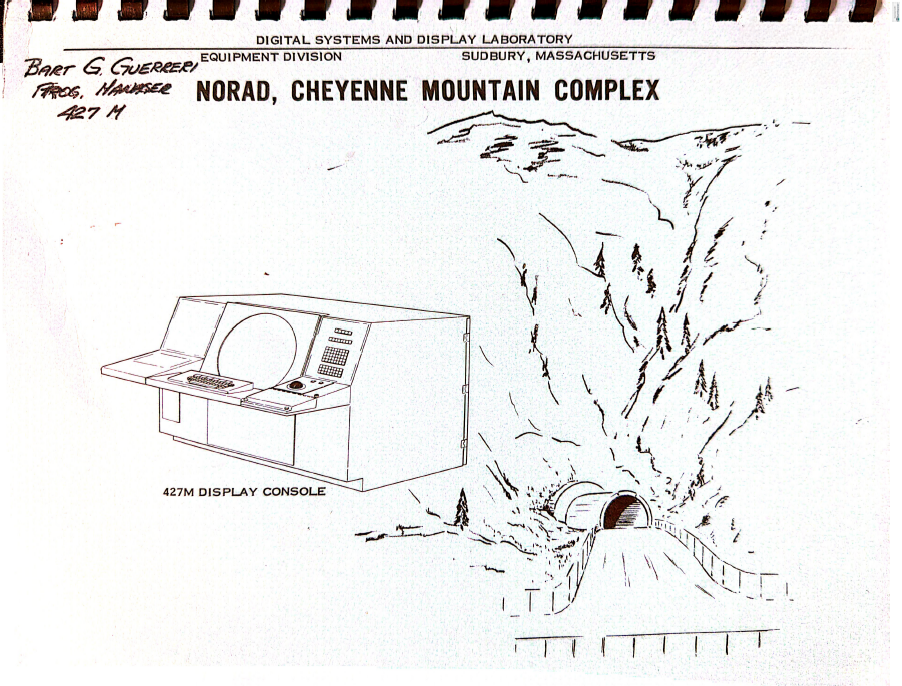
NORAD Console · 427M Display
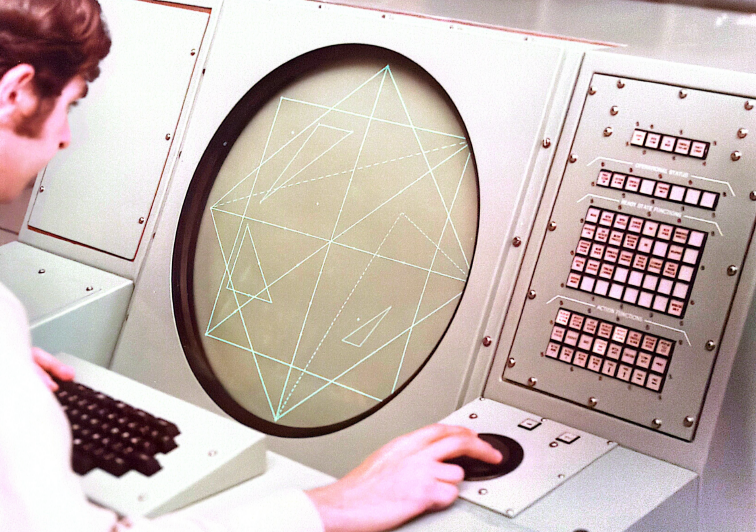
Cheyenne Mountain Complex
In 1984, DSD achieved a defining milestone when it was selected over 18 competitors to design and install a local area network for the U.S. House of Representatives. This first major product deployment included 100 custom bus interface units connecting computers across a broadband network using cable television infrastructure. The solution delivered exceptional reliability, averaging over 41,000 operational hours compared to the industry norm of 6,000 to 7,000 hours, with a resilient design that isolated individual port failures to prevent system-wide outages. This success established DSD’s reputation for innovation and fueled early growth.
In 1987, DSD secured its first major Information Technology and Systems Engineering contracts at Maxwell-Gunter Air Force Base, supporting the Cargo Movement Operating System and Combat Ammunition System programs. This work introduced modern client-server architectures and rigorous systems engineering practices, marking the true catalyst for the company’s expansion. By 1990, DSD was supporting large-scale federal initiatives such as the Central Archive for Reusable Defense Software program, further strengthening its engineering capabilities. Throughout the 1990s, DSD played a key role in advancing government process maturity, contributing to early Software Engineering Institute Capability Maturity Model Integration achievements through Systems Engineering Process support.
A major turning point came in 1997 with the award of the GSA IT Schedule 70 contract, which enabled DSD to operate as a prime contractor and significantly expand its federal presence. Beginning in 1998, DSD won numerous prime task orders at Langley Air Force Base, including the development of Information Assurance Concepts of Operations and the Tactics, Techniques, and Procedures used to protect Air Combat Command networks. DSD continued to grow its portfolio of prime contracts, including Network7, where the company provided systems engineering, information warfare analysis, communications security, network engineering, program management, and financial management support, and Spectrum Management, delivering critical frequency management services.
In the late 1990s and early 2000s, DSD expanded its impact through direct support to the Air Staff and senior leadership. The company contributed to early enterprise systems such as HAFDASH, which became the foundation for the Air Force Portal, and supported the Air Force Chief Information Officer by building infrastructure and hosting operations. In 2003, DSD was awarded its largest prime task order under the Information Technology Services Program II contract, supporting Integrated Logistics Information systems for the Air Force.
DSD further distinguished itself in 2007 by achieving National Information Assurance Partnership accreditation for its Common Criteria Test Laboratory, becoming one of only a small number of certified labs in the United States. The company continued to demonstrate engineering and process maturity with Capability Maturity Model Integration Level 3 appraisals in 2008 and 2013. In 2021, DSD achieved ISO 9001, 14001, 20000, and 27001 certifications, reinforcing its commitment to quality, security, and operational excellence.
Today, DSD Laboratories continues to deliver innovative, secure, and mission-critical solutions as a trusted prime contractor across the federal government, building on decades of experience in systems engineering, cybersecurity, enterprise IT, and mission support.